


Aparigraha is often translated as non-grasping or non-possessiveness.
At first glance, it sounds simple, don’t take more than you need.
But in today’s world, it might be one of the most radical practices we can explore.
We live in a culture that constantly tells us we are not enough.
Not thin enough.
Not productive enough.
Not successful enough.
And the solution we’re offered is almost always the same, buy something, fix something, add something.
More stuff.
More goals.
More noise.
More pressure.
Where has all that got us?

Aparigraha quietly rebels against all of this and asks a different question.
What if peace doesn’t come from having more… but from needing less?

What Aparigraha really asks of us
At its core, Aparigraha is about non-greed and non-possessiveness.
It’s about noticing where we cling, to objects, habits, identities, control, comfort.
This isn’t just about material things, though that’s a big part of it.
It’s also about what we hold onto emotionally and mentally.
old identities that no longer fit
stories about who we should be
guilt, comparison, perfectionism
the need to be busy, needed, or always available
Grasping doesn’t always look like hoarding.
Sometimes it looks like endless scrolling.
Sometimes it looks like saying yes when you mean no.
Sometimes it looks like holding onto a version of yourself that is already asking to be released.
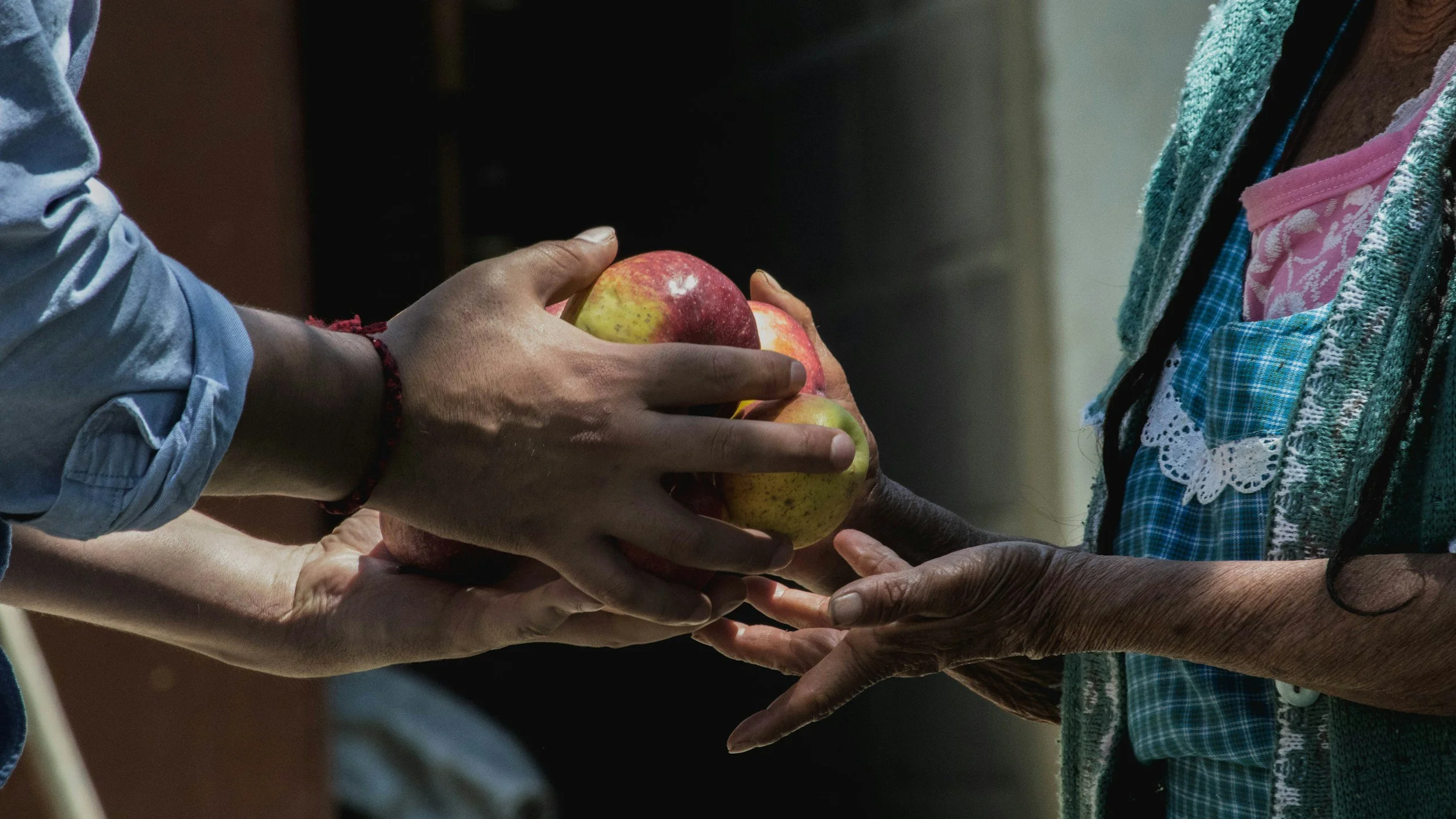
It is also asking us to share, yes donating food and the cloths you don’t need is a great example. But we are also called to be aware of our talents and gifts and offer them to the world too. How cruel it would be if you never shared what’s naturally inside of you? Your beautiful voice, your eye for photography, your gift for teaching, your patience or your poetic way with words.
Aparigraha doesn’t stand alone
Aparigraha is the 5th Yama, part of the 8 limb path of Patanjali's Yoga Sutras.
It does not stand alone, but is preceded and practiced along side.
Ahimsa (non harm)
Satya (Truthfulness)
Asteya (Non-stealing)
Brahmacharya (Celibacy)
Aparigraha becomes deeper and more alive when it is held alongside the others, especially Ahimsa.
Aparigraha teaches us about non-greed and non-clinging.
Ahimsa reminds us to consider harm and compassion.
When we talk about the choices we make, what we buy, what we support, what we consume, that isn’t Aparigraha acting alone. It is Aparigraha in relationship with Ahimsa, reminding us that even small purchases have impact.
This keeps your yoga practice real and honest. It’s not about being perfect or following rules. It’s about being aware, awake, and conscious of the ripple our choices create.
Practicing Aparigraha is just like practicing yoga asana, in fact I would say in todays world practicing aparigraha is more challenging that any Asana there is. When we learn to do Asana, its tough at first but if we stay consistent, committed even if we have to modify, use supports, ask for help we eventually feel steady and stable in a pose we throught was only for someone else.

A quieter kind of rebellion
Aparigraha isn’t about giving everything up and disappearing off-grid.
It’s about softening our grip.
When we loosen the hold on “more,” something else begins to grow:
more space
more breath
more honesty
more peace
Peace doesn’t only happen in meditation.
It grows in the quiet choices we make every day,
to consume less,
to compare less,
to rush less,
to carry less fear about not being enough.
Aparigraha reminds us. You don’t have to earn your worth. You don’t have to prove your value. You don’t have to keep grasping.
Sometimes the deepest practice isn’t adding something new… It’s learning how to gently let go.
I’ve watched countless documentaries about consumerism, the environment, the human and animal suffering caused by a world constantly over-eating, over-achieving, over-consuming……..I have felt the guilt about my involvement in all of it, but I try to release that guilt and use it as a catalyst for change.

I remember the first time I consciously practiced Aparigraha, it was in a restaurant. As I reached for napkins, I noticed my usual habit of taking three or four “just in case.” This time, I paused and took only one. And when I actually needed another, I simply went back and got it. Such a small moment, no applause, no big gesture, but it felt quietly powerful to make that choice with awareness. From moments like that, our practice grows.
10 Positive Ways to Practice Aparigraha
Choose “enough” over “more.”
Pause before buying and ask: Do I already have enough? Simplicity can feel like freedom.Support low-waste and ethical options.
Refill shops, local makers, fair-trade brands, turn shopping into an act of care.Share instead of owning everything.
Create or join a neighbourhood sharing group for tools, books, clothes, or kids’ items.Fall in love with second-hand.
Charity shops, swaps, vintage stores, see it as treasure hunting, not compromise.Repair before replacing.
Mend, fix, repurpose when you can. Let replacements be intentional, not automatic.Try a “slow-buy” or “no-buy” season.
A month of essentials only can reveal just how much you already have.Pass things on with love.
Donate or gift what no longer serves you, your letting go can support someone else.Practice Aparigraha in the mind.
Let go of the need to control, compare, or always be right.Make conscious consumption a ritual.
When you do buy something, do it with presence and gratitude instead of guilt.Start small, and celebrate small.
Aparigraha grows through tiny daily choices, not big dramatic gestures.
This blog was inspired by the conversations we had at our last Yoga Club. Our monthly online discussion group is a space to explore these ideas together, see below for details to join the next one. I’d also love to hear your thoughts: if you have other ways you practice Aparigraha, or reflections to share, please leave a comment below!